GEOLOGY
The invisible sculptor
The drama we see on the surface - the herds of grazers moving as one, the famous river crossings, the fights for territory and survival. All of this plays out on a stage built by ancient forces. The endless plains of the Serengeti aren't just dirt on your boots. They are a masterpiece made from tectonic movement and volcanic ash, sculpted by the earth itself. A stage made of rock that has been ripped apart, crushed, pushed, and remodeled into the spectacular landscape we can marvel at today.
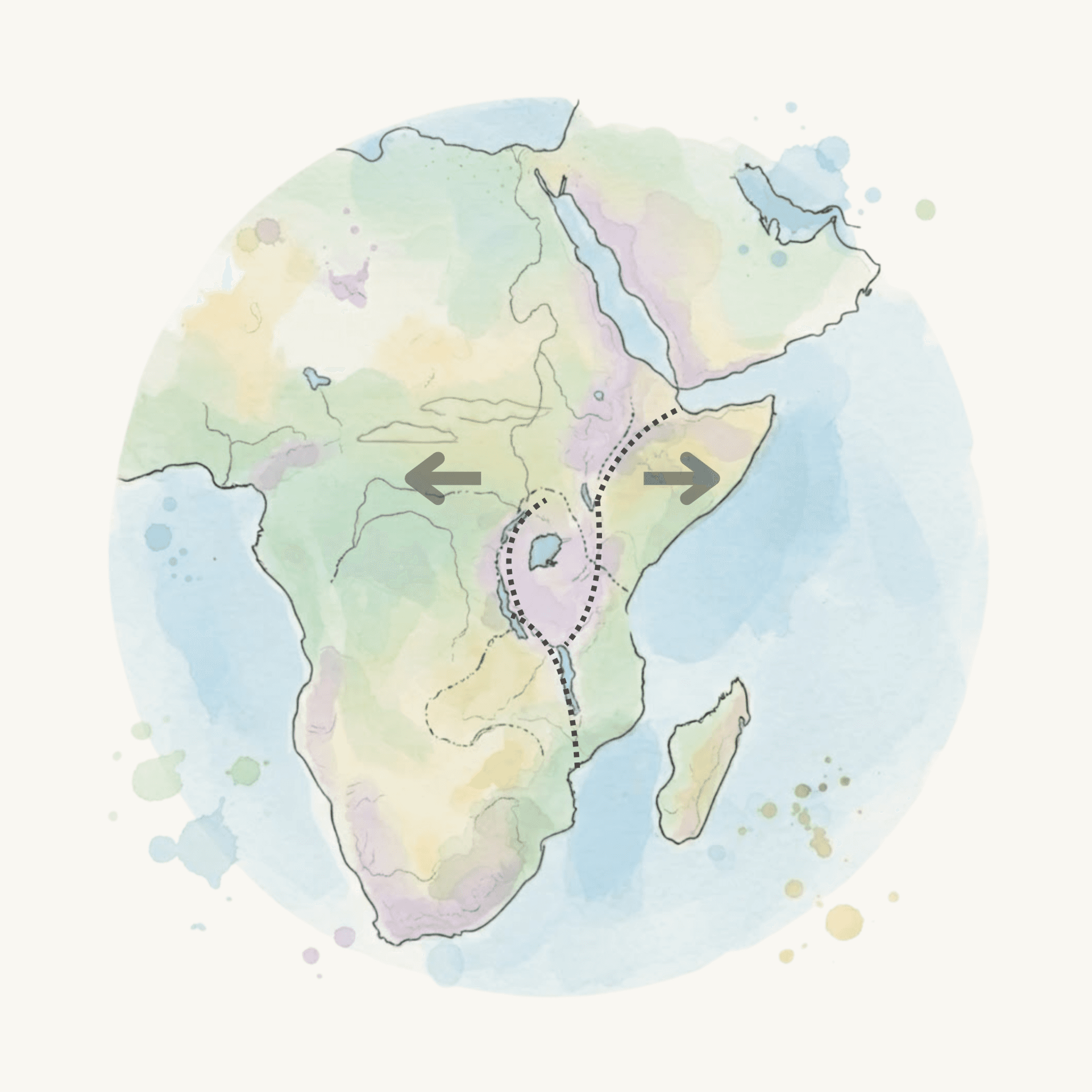
The stage is the largest geological wonder of this part of the world - the Great Rift Valley. A trench consisting of huge cracks in the crust beneath Eastern Africa, thousands of kilometers long, and still moving. The African continent is slowly being split in two by tectonic plates pulling in opposite directions. In the midst of this slow but powerful geological drama, restless volcanoes continue to shape the landscape, periodically covering large areas in ash - pulverized rock and minerals blasted into the air during volcanic eruptions.
These eruptions have blanketed the Serengeti plains in mineral-rich ash for millions of years. Today, this is reflected in the huge herds of animals thriving in this unique ecosystem. The specific soil chemistry of the plains is what makes the grass so nutritious for wildebeest, which is the primary driver of the Great Migration.

The physical alteration of the landscape as tectonic forces continue their slow work creates its own corridors and pathways. Steep escarpment walls and deep valleys have sculpted funnels, perfect for steering the waterways, and perfect for steering the huge herds of wildebeest. The Great Migration is not millions of animals randomly wandering, looking for food. It is a highly structured mass movement - a geographical circle of life - guided by the characteristics of the landscape and nutrient-rich soil, repeated by these animals for millennia. The knowledge is passed on from generation to generation. They know where to find the high-quality grass that is crucial for the newborn calves to survive their first year. They know where to find the scarce water sources that would ensure survival when the dry season sets in after the long rains.
This is a timeless connection between the wild and the life-sustaining landscape. The earth itself is still shifting and slowly but steadily the East African Rift is growing larger. The landscape is still being chiseled, and material from the earth's interior is still being spewed from erupting mountains.
This part of the world can take your breath away, for many reasons. The obvious ones, like the steep walls of the Ngorongoro crater, the vastness of the Serengeti plains, and the wonders of the wildlife. But the experience goes deeper than what you see on the surface. When you, for a moment, lose yourself in a gaze across the savannah while yet another magnificent sunrise unfolds, you are witnessing the rhythm of a living planet, where geological forces still shape the lives of everything that calls this place home.
explore more in